Interested in joining our group?
Have a look at our available projects and let us know what you are interested in.
Available masters and honours projects
-
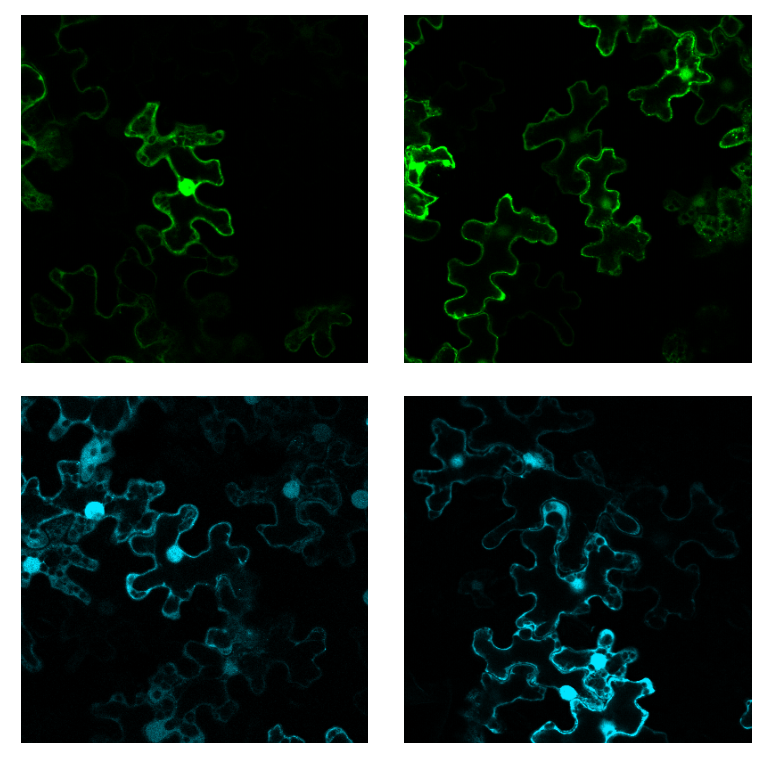
Figure 1. Btr1 (green) and Btr2 (cyan) were fused to fluorescent proteins and transformed into tobacco leaves. The fluorescence was analysed using confocal microscopy.
Wheat, barley and rye belong to the Triticeae tribe and are major contributors to human nutrition. The high demand for these crops can only be met because ancient farmers selected favourable traits from wild populations during domestication and are still under breeding and crop improvement. One of the most significant traits allowing cereal domestication is the loss of grain dispersal also known as non-brittle rachis. In the domesticated type grains are retained on the central floral axis (rachis) after full maturity. This allows for a simplified harvest compared to wild progenitor where the grains dispersed at fully maturity. Brittle rachis 1 (Btr1) and Btr2 have been identified to play a major role in controlling this trait. However, the molecular function of the genes has not been fully understood.We have previously analysed the subcellular localization of barley Btr1 and Btr2 (Figure 1) to gain an understanding about their molecular function. This honours project will use a similar approach to investigate the subcellular localization of wheat Btr1 and Btr2 to evaluate if the molecular function is well conserved among these species. In a first step the genes will be cloned to a plasmid vector and fused to fluorescent proteins. After transformation into tobacco the proteins can be visualized in cells using confocal microscopy. The project suit someone with a strong interest in molecular genetics, evolution, and microscopy. Data generated during the project will directly contribute to the overarching aim of understanding the molecular mechanism of genes involved in grain dispersal and will potentially be published.
Contact: Lucas Reber ( lreber@student.unimelb.edu.au )
-
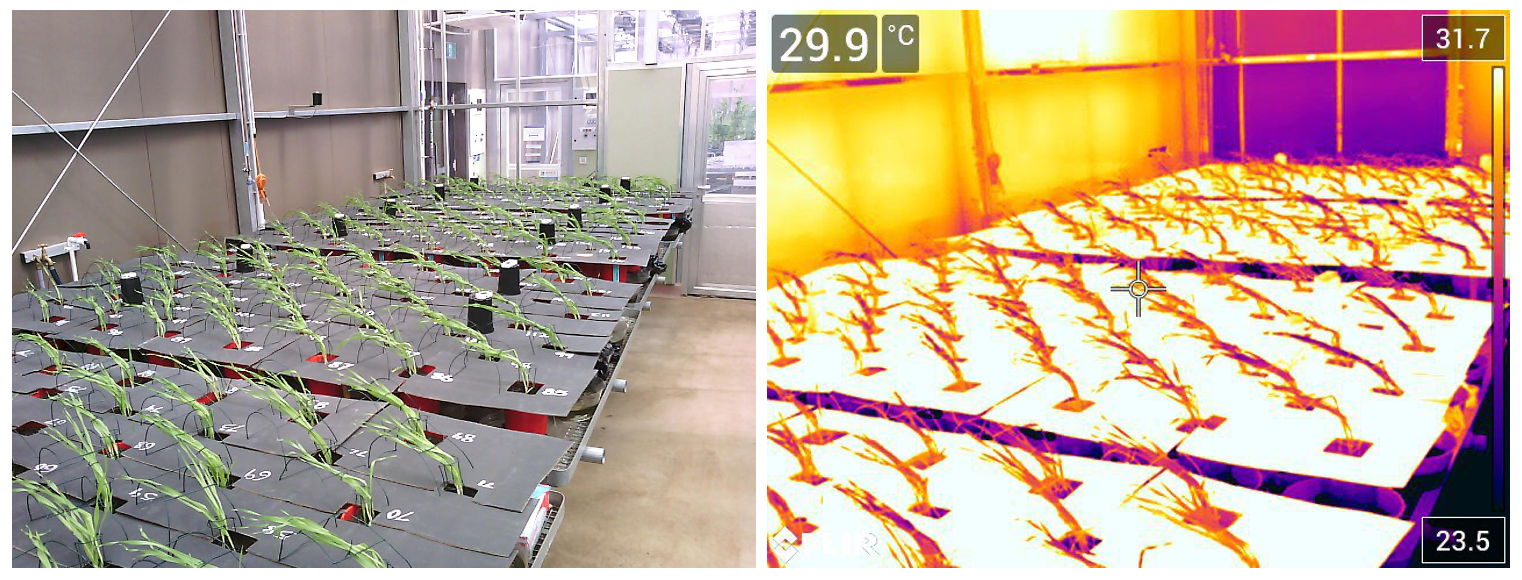
Barley plants in preparation for phenotyping using a thermal camera. Thermal imaging provides insights on how plants use water under various water regimes.
Drought and salinity are two major environmental stresses that simultaneously affect crop plants in their natural growth environments. Concurrent salinity-drought stress has a more significant impact on various plant physiological traits compared to each individual stress alone, causing significant yield reductions. This combined stress situation amplifies the vulnerability of agricultural systems and food security. As salinity and drought stresses share common pathways and responses within crop plants, a potentially effective approach to reduce yield losses could involve simultaneously improving the plants' ability to withstand both of these stresses. Wild barley has shown superior tolerance to abiotic stress and hence could be a valuable genetic resource to improve stress tolerance in cultivated barley. As a first step, understanding the way in which these valuable genetic resources respond compared to modern cultivars can provide crucial insights into the underlying mechanisms of stress tolerance. In this proposed study, a panel of contrasting wild and cultivated barley lines, selected from the previous studies, will be used in a physiological experiment for combined salt and drought stresses. This comprehensive analysis aims to elucidate the intricate interplay of stress responses and inform targeted strategies for the development of tolerant crop varieties, ultimately contributing to the advancement of sustainable agriculture in the face of climate change.
In the context of this project, the student will gain a comprehensive understanding of important aspects in scientific research. Building upon existing studies, this practical experience will offer student the opportunity to utilize advanced plant physiological methods, including emerging thermal imaging techniques which will be achieved through applying on wild barley plants. Subsequently, data analysis using statistical tools will provide hands-on skill on analytical methods. The diverse nature of the project will also help the student develop their skills in managing time and resources, ultimately ensuring the smooth progress and success of the project. -
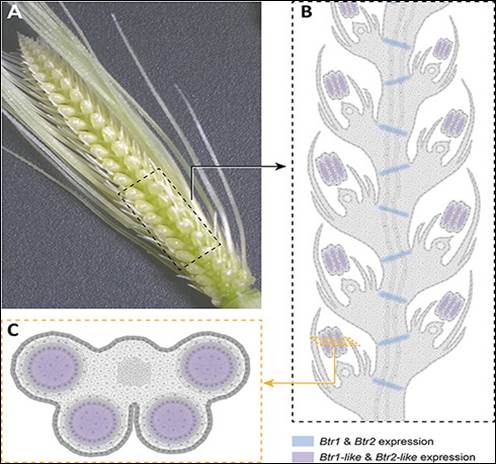
Ancient ancestors of modern cereal crops were domesticated by early farmers in the fertile crescent around 10,000 years ago. Of the traits allowing modern cereal cultivation, the advent of grain retention is arguably the most critical. Wild cereals disperse their ripened grains at maturity. However, early farmers selected naturally mutated plants which instead retained their ripened grains, allowing for easy and stable harvest. In wheat and barley, we have demonstrated a unique mechanism of grain dispersal which resulted from two recently evolved genes – Btr1 and Btr2. We hypothesise that these two genes arose from a duplication followed by neo-functionalization from highly similar copies called the Btr1-like and Btr2-like genes. However, at present, no molecular or biological functions have been linked to the Btr-like genes, rendering them and their role in the history of grain domestication a mystery.
We are investigating the Btr-like genes in wheat and barley with a multi-faceted approach, utilizing molecular and bioinformatic methods to unravel their roles in modern cereals and follow the evolutionary trail that ultimately led to grain domestication. This student project will focus on tracing Btr-like gene conservation and visualizing gene expression in wheat tissue samples. The project will suit someone with strong interests in evolutionary genetics who wants to build a strong foundation of broadly applicable molecular, histological, and bioinformatic techniques. This project arises in the early stages of Btr-like research, allowing the student to generate a variety of novel data with direct applications to the overarching project and the potential to contribute to laboratory publications.
-
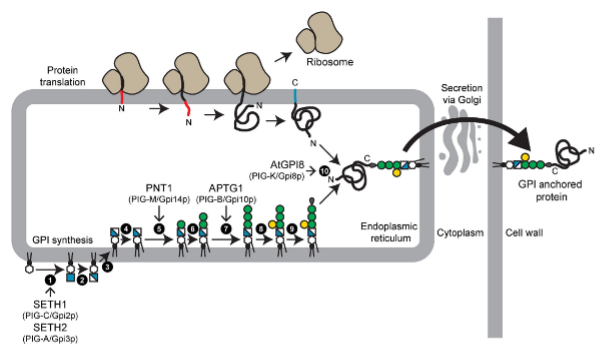 Figure 1. Biosynthesis of GPI-anchored proteins in plants. (From: “Plant glycosylphosphatidylinositol anchored proteins at the plasma membrane-cell wall nexus,” by Yeats, T. H., Bacic, A., & Johnson, K. L. (2018), Journal of integrative biology, 60(8),649-669.)
Extracellular matrix remodelling and signalling in plants requires a range of proteins targeted to the plant cell surface and in model systems, a special molecule (glycosylphosphatidylinositol, GPI) is thought to be central to the anchoring of key proteins. These anchored proteins are called GAPs and have been found in all eukaryotic organisms. The GAPs contain a signal peptide at the C-terminus of proteins, which is specific for detection and attachment of GPI. The synthesis of GPI anchor and attachment to the C-terminus of proteins occur in the Endoplasmic reticulum. Then, the GAPs are transported to the outer surface of plasma membrane or cell wall along the secretary pathway through Golgi. In plants, around 1% of proteins are predicted to be GPI-anchored. The GAPs play an important role in various plant biological progress, such as signalling, cell wall biosynthesis and plasmodesmatal transportation.
In this project, you will focus on the wheat spike, because it plays critical role in generating the grain yield. You will use the special solubility properties of GPI to do a bulk isolation of GPI-linked proteins from developing spike tissues. The proteins in the bulk extraction will be identified by mass-spectroscopic technology available at the University of Melbourne. The project would then interpret the types of proteins found to be co-extracted with GPI in the context of wheat spike development and establish some new ideas around GPI-anchored proteins and spike development. This will be integrated into a considerable effort to understand the spike development project within CropGEM research group.
-
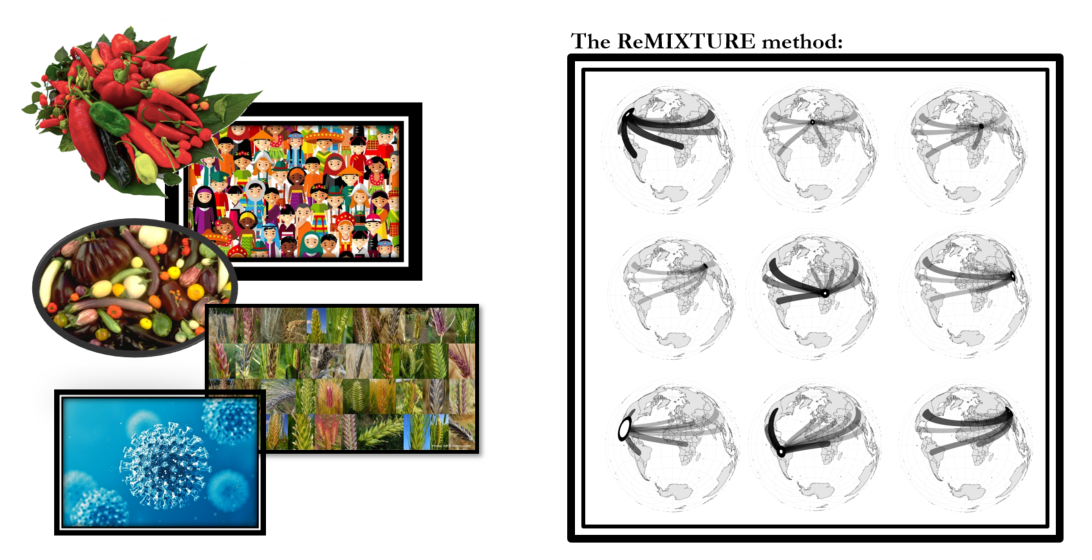
Behind many great scientific insights lies a good way of looking at data. The tool ReMIXTURE (a simple bioinformatics package written in the language R) was written in 2020 with the aim of visualising genetic data from a large number of chilli peppers from around the globe. Since the distribution of chilli peppers is entirely a result of human culture, it’s no surprise that the results beautifully show them snaking out of their original centre of diversity in Central America, over the seas with colonial voyagers, along major trade routes like the Silk Road, and expanding into new homes as far away as Southeast Asia.
ReMIXTURE, however, has far more potential applications than just chilli peppers. We plan to officially release it in the literature by running it on publicly available datasets such as humans, barley (which tracks the spread of agriculture), and perhaps even novel things like coronaviruses!
We are looking for an exceptionally motivated and creative candidate with an interest in big-picture questions in evolution, genetics, and the origins of agriculture and the history of animal and plant domestication. A strong nerdy streak and attraction to complexity are essential---some coding will be involved, and the candidate will need to understand the simple algorithm that underlies the ReMIXTURE method. If you have enjoyed writing some code (even at complete beginner level) or if you're a bit of a wizard with MS Excel formulas, you're the right person. Developing scripting/analysis skills early provides a huge boost to your future in science or elsewhere.
You'll work in the CropGEM (Crop Genetics and Molecular Evolution) Lab, supervised by Dr. Mohammed Pourkheirandish. You'll work closely with Dr. Tim Rabanus-Wallace, who wrote the original package, and with several prominent international collaborators who have agreed to help provide and interpret data. The lab is a very dynamic and friendly environment and a perfect launch-pad into the world of academic science. You will find and acquire datasets to run ReMIXTURE on, test and compare it with similar tools, interpret the most interesting results in terms of evolution/cultural history, and optionally contribute to drafting a manuscript for publication in a scientific journal. If the candidate especially wishes to advance their bioinformatics/analysis skills, they will be given every opportunity to expand the package to add more functions or optimise speed.
This is a uniquely broad project with real publication potential. If this sounds like your thing, drop Tim a line at tim.rabanuswallace@unimelb.edu.au, we'll be delighted to hear from you!
-
Barley ranks as the 4th important crop in the world, which is being used for both feed and malting. Sustainable agriculture goes beyond just focusing on grain yields in barley breeding. Complex traits including stem strength impact yield indirectly. Head loss is characterized by the failure of the peduncle occurring along the internode located just below the spike during the harvest season. This vulnerability is exacerbated by dry and hot climates, which are key manifestations of climate change. In this project, we will focus on the impact of nutritional elements including nitrogen and silicon on spike retention in barley. Nitrogen (N) is an essential plant macronutrient, integral to numerous metabolic processes. It is well documented that the over-fertilization of N induces plant lodging, a different type of stem failure from head loss. Previous studies shown that Silicon (Si) supplement can provide stem strength in cereal crops. However, the relationship between N, Si fertilization and peduncle strength remain unexplored.
Our group has previously identified barley genotypes that exhibit varying degrees of head loss resistance and nitrogen use efficiency capabilities. This research project aims to examine the effect of N and Si on stem strength and flexibility. The student will first study the effect of different nutrient combinations by recording selected traits of head loss resistance and NUE to identify the most discriminating treatment. Then, the samples will be subjected to microscopic studies to assess the responsible cell wall components. We aim to measure the stem strength using a specialised machine for mechanical strength testing called Instron. The project is looking for a student who is passionate about plant breeding and physiology research, and the results generated will directly contribute to a significant project on crop improvement.
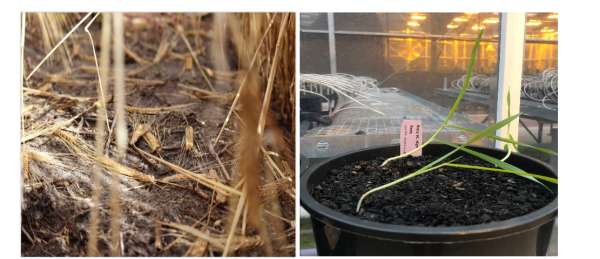
Fig 1. Head loss in the field (left) and lodging caused by excessive N application (right)
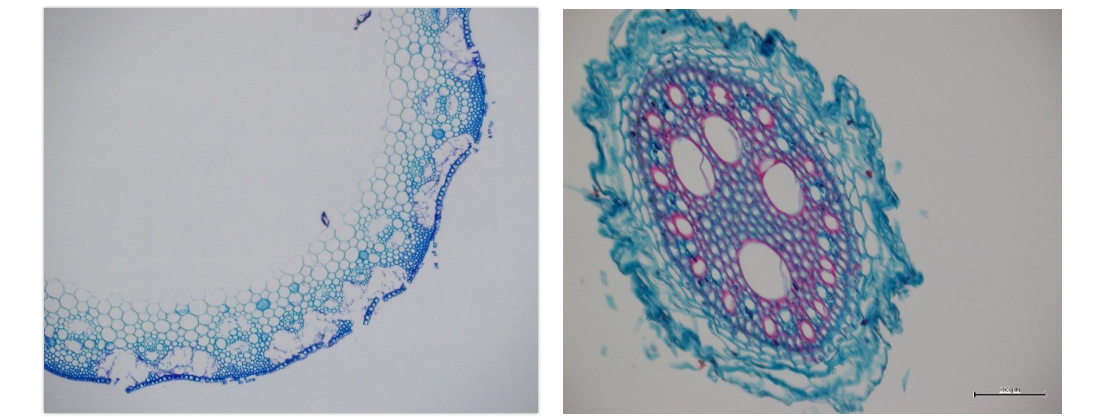
Fig 2. Cross section of barley peduncle (left) and root (right)
-
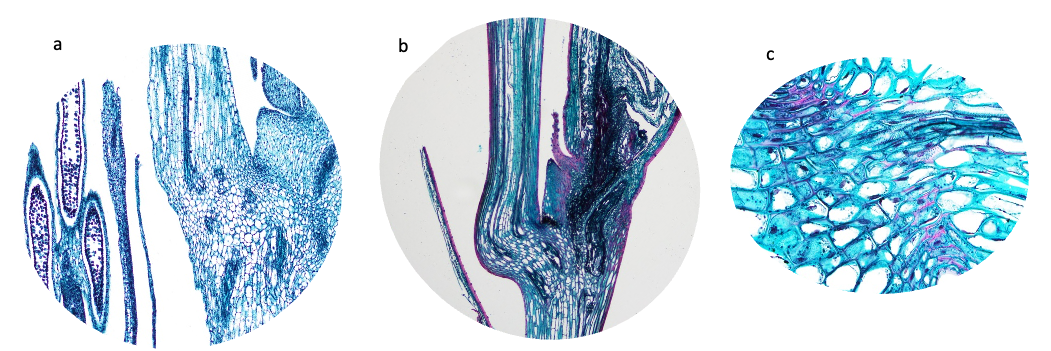
Figure 1. Stained cells at the separation zone of barley spike at different developmental stages. Stained secondary walls that are under deposition in cells in purple colour (c).
Project detail: Cereal crops, including wheat, barley, and rye are the critical source of human calorific and dietary fibre and their grain has been in demand for years. In wild types, the central axis of inflorescence (called rachis) breaks at maturity. Grains in these cereals along with a piece of rachis snap and fall on the ground after full maturity, known as brittle rachis. This grain separation is unique in Triticeae tribe. It is different from shattering reported in other cereal species such as rice or even model plants such as Arabidopsis where grain is separated without rachis fragment.
The grain dispersal is detrimental to agriculture and complicates harvest. Grain retention was one of the key traits that have been selected by ancient farmers and breeders during crop domestication. However, the mechanism of how the grain breaks at the rachis junction is yet to be determined. In this project, you will investigate the world of plant cells and their wonderful organelles, and cell walls and investigate the locations of specific cell wall components in mutant and wild-type plants in order to unlock the unique mechanism of brittle rachis in Triticeae. In particular you will identify available coloured dyes for tagging cell wall components in wheat and rye and utilise the extensive knowledge from our group's barley work to interpret your microscopic observations. You will have access to previously optimized protocol and histology techniques as well as high-resolution microscopy equipment that will make this project exciting, and potentially a valuable publication.
Skills focus: Specimen preparation for histology, Light microscopy imaging, and image analysis